Goodnotes
Reimagined student collaboration with AI study tools (1st place)
Disciplines
UX Research • UI/UX Design • Design Competition
Team
Daniel Lee
Madison Lee
Katie Wang
Vivian Xie
Team
UX Designer
Tools
Figma
Award
1st place / 70 participants

OVERVIEW
Goodnotes, a leading digital note-taking app, combines the natural feel of handwriting with powerful AI features. For the Designathon, our prompt was: “What could the future of classroom collaboration look like—with Goodnotes at its core?” We had just six hours to research, ideate, and prototype a solution to that challenge. My team's solution secured 1st place out of 70 participants.


CHALLENGE
How might we use Goodnotes to reimagine student to student study group collaboration and maximize open discussion?
RESEARCH
Understanding collaboration challenges through student and teacher perspectives
To ground our design in real needs, we conducted interviews with three high school students and three high school teachers. Our goal was to understand current pain points and behaviors around classroom collaboration, particularly within group projects.
SYNTHESIS
From pain points to personas: balancing freedom, structure, and communication
From our interviews, we identified a few core pain points and created 2 user personas: the dependable student and patient mentor
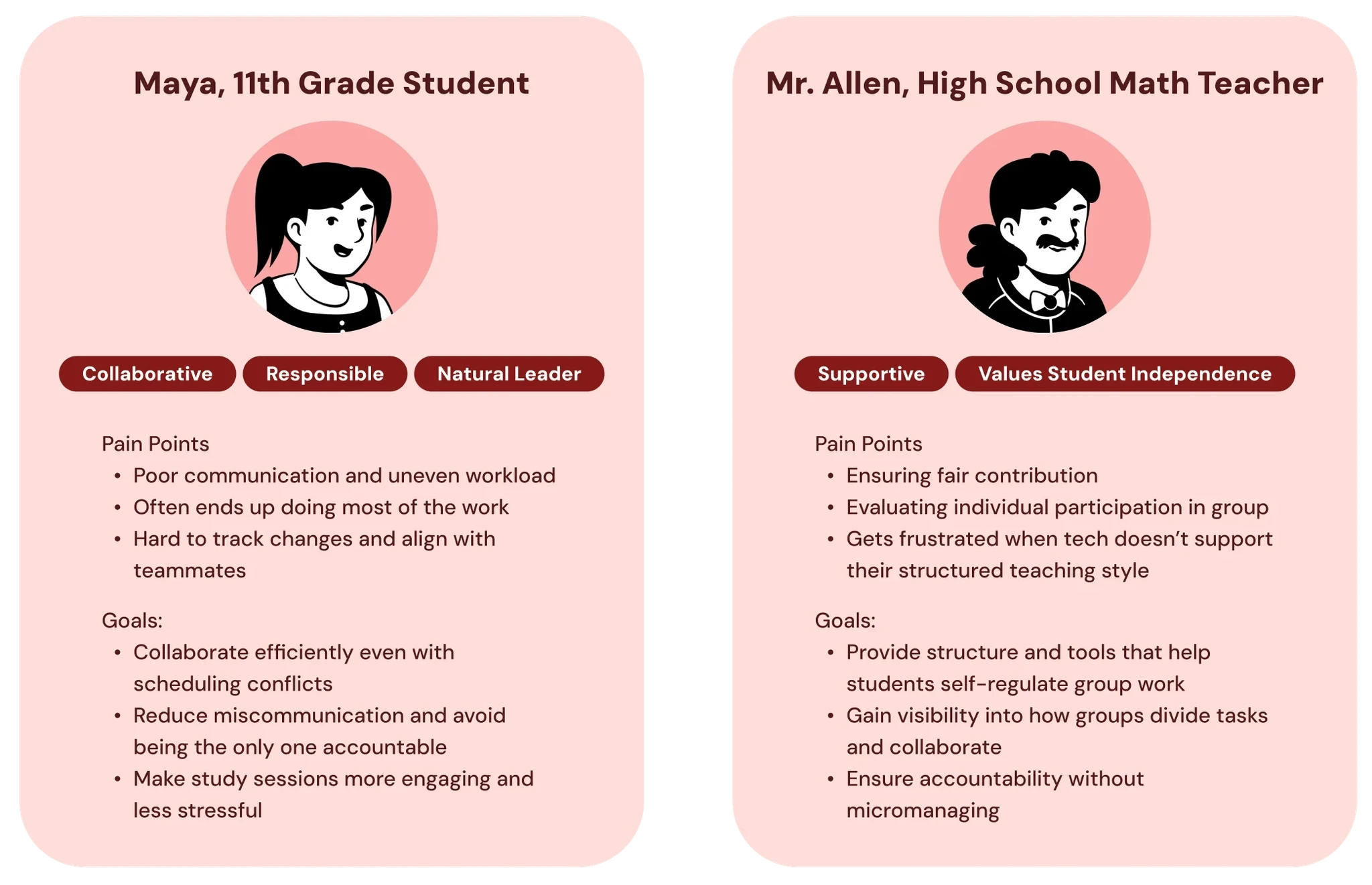
These insights led us to frame the design challenge around balancing freedom and structure in group collaboration, while addressing gaps in real-time communication and contribution tracking.
IDEATION
Gamifying Group Study with AI
We explored how Goodnotes could build on its strength in live handwriting collaboration by integrating AI features like note summarization and Q&A. Inspired by Quizlet Live, Kahoot, Family Style, and Snackpass, we envisioned a system where students co-create notes, track contributions, and study together through engaging, classroom-based challenges.



FINAL DELIVERABLE
Introducing: Goodnote's Study Space
Groupnotes & Voice Chat
The teacher posts weekly documents listing the topics to be covered and each student group is responsible for populating this notebook collaboratively with everything they know. All contributions come from the students, encouraging ownership and active engagement.
A built-in server allows for asynchronous voice collaboration, helping students coordinate without the friction of scheduling live meetings.


Study Quest
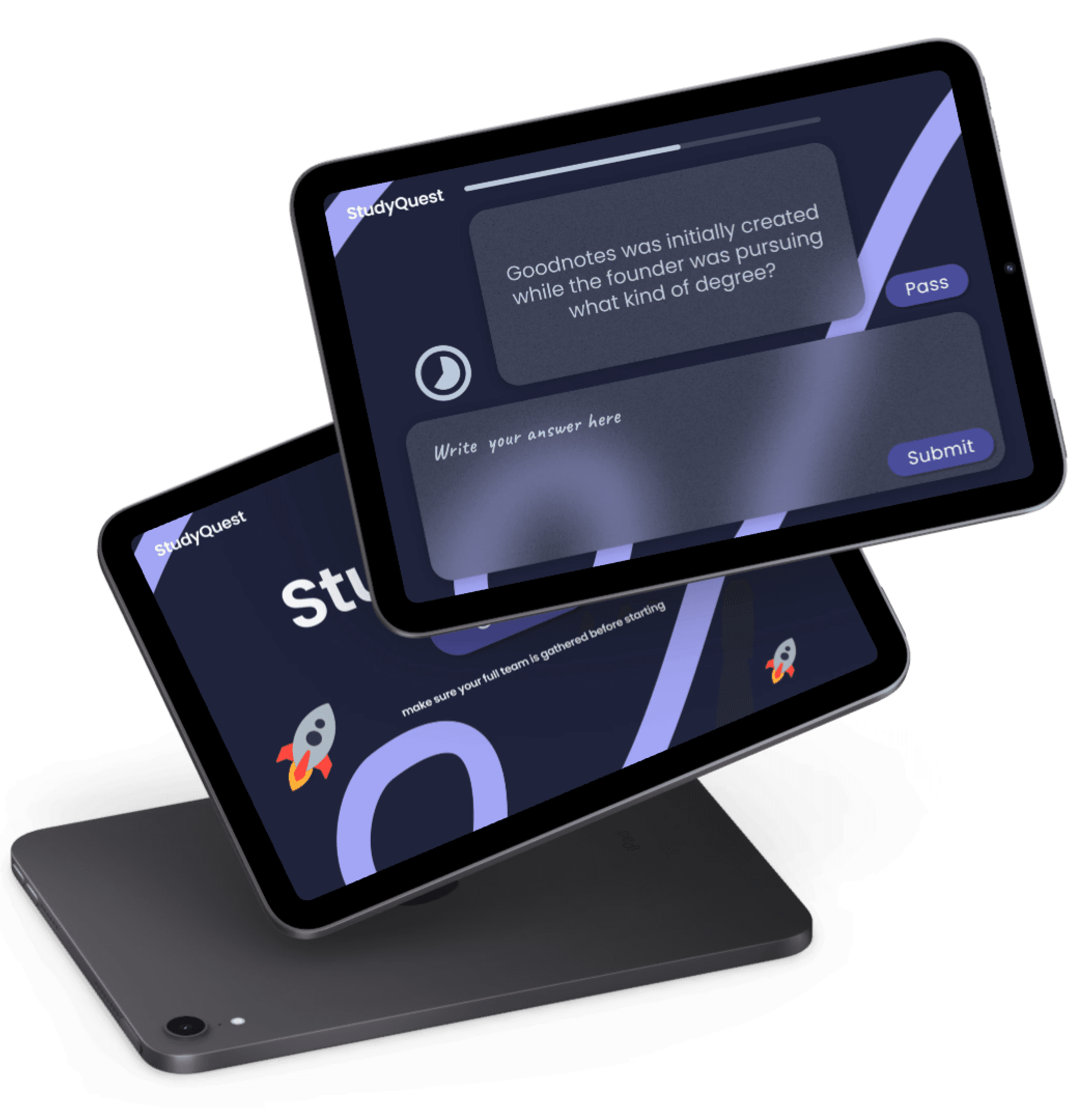
Study Quest uses AI to generate quiz questions directly from a group’s shared notebook. Inspired by the cooperative mechanics of Family Style, it requires all members to be physically present, reinforcing both knowledge and social connection.
One Question, One Screen: Only one student sees the question at a time.
Pass or Play: That student can answer or pass it along before time runs out.
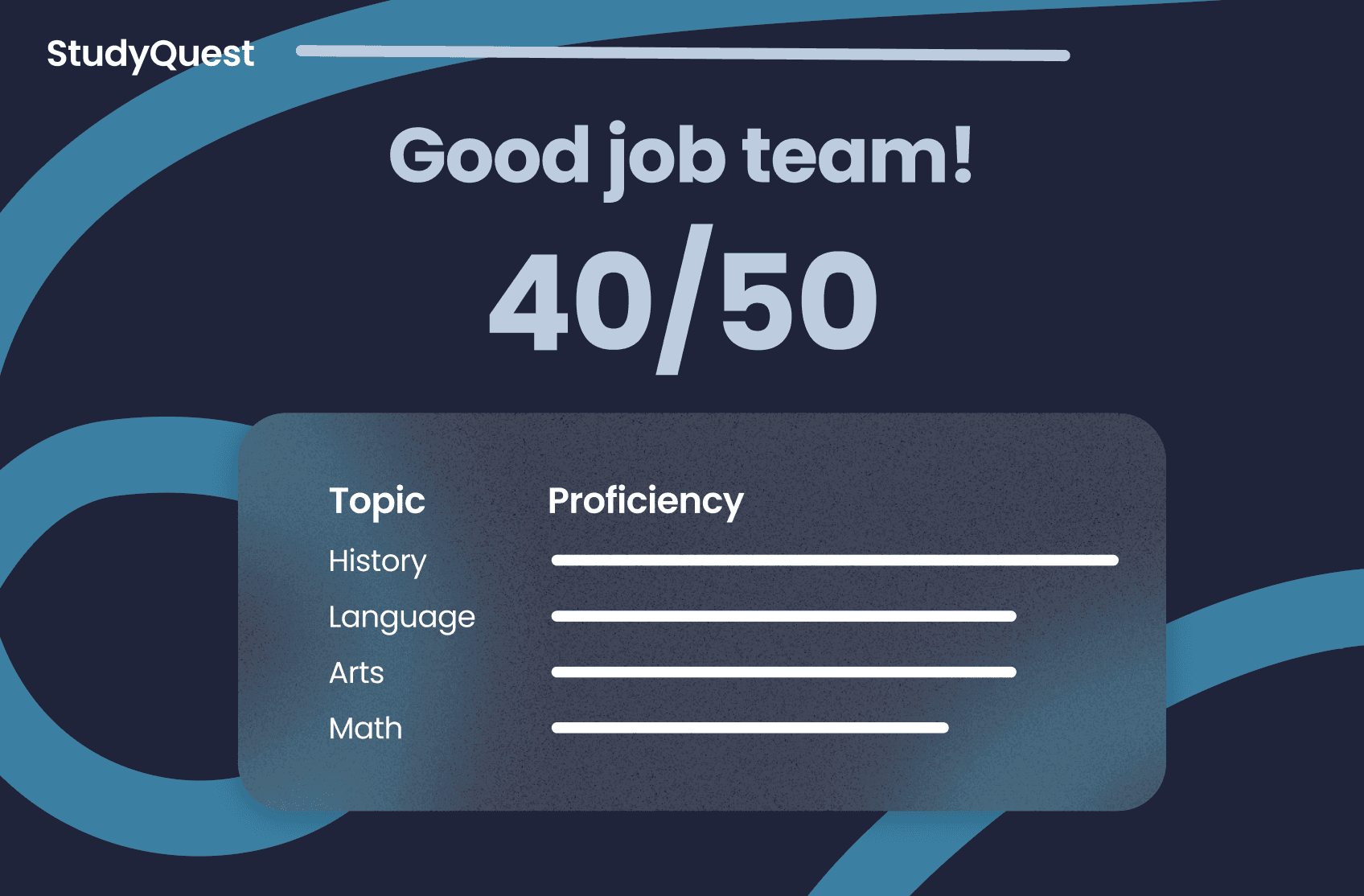
Post-Game Insights: Goodnotes AI highlights strengths and gaps for targeted review.
By blending proximity, turn-taking, and playful competition, Study Quest transforms studying into an engaging, collaborative experience.
Classroom Race
Each group is represented by a spaceship on a classroom leaderboard. As teams earn points through Study Quest, their ships advance in a space-themed race—building excitement, accountability, and a sense of friendly rivalry.


Team Companion
Every team cares for a customizable pet that evolves based on their performance. This shared responsibility fosters collaboration, positive reinforcement, and motivation—especially engaging for younger learners.
REFLECTIONS AND TAKEAWAYS
Brainstorming Was Nonlinear—and Essential
Our ideation process wasn’t straightforward. We frequently had to return to the drawing board, reevaluating ideas that sounded exciting but didn’t align with the user research or the constraints of a classroom. This iterative approach helped us land on a concept that was both imaginative and grounded in real needs.
User Insights Drove the Vision
Talking with students and teachers revealed core pain points—like uneven contribution, unclear communication, and limited teacher oversight—which directly shaped our solution’s structure and feature set.
AI Should Amplify, Not Override
We designed our AI features to support learning, not shortcut it. The study guide generator and post-game analytics help students consolidate knowledge and reflect on gaps, encouraging long-term retention.